- Home
- Products
- About Us
- Services & Support
- News
- Contact Us
Views: 300 Author: Site Editor Publish Time: 2025-11-14 Origin: Site


Content Menu
>> Understanding the Principles of RBC Operation
>>> Biofilm Development and Nutrient Assimilation
>>> Aeration and Metabolic Activity
>>> Biological Shearing and Sloughing
>> Key Components of an RBC System
>>> Rotating Media
>>> Horizontal Shaft and Bearings
>>> Drive Mechanism
>> Design Considerations for Optimal Performance
>>> Staging
>>> Submergence
>>> Operational Simplicity and Stability
>>> Low Sludge Production and Good Settling Characteristics
>> Disadvantages and Limitations of RBC Systems
>>> Higher Initial Capital Costs
>>> Mechanical Wear and Maintenance
>>> Media Fouling and Clogging
>> Applications of RBC Technology
>>> Municipal Wastewater Treatment
>>> Industrial Wastewater Treatment
>>> Tertiary Treatment and Nitrification
>>> Pre-treatment Applications
>> Operational Challenges and Mitigation Strategies
>>> Filamentous Growth and Poor Settling
>>> Mechanical Component Failures
>>> Odor Generation
>> Conclusion
<p>
Wastewater treatment is a critical global challenge, necessitating the development of efficient and sustainable technologies to safeguard public health and environmental integrity. Among the diverse array of biological treatment processes, the Rotating Biological Contactor (RBC) stands out as a reliable and effective fixed-film system. First introduced in Germany in the late 1960s, RBC technology quickly gained international recognition for its unique approach to cultivating microorganisms on rotating media, thereby promoting the aerobic degradation of organic pollutants in wastewater. Its operational simplicity, energy efficiency, and ability to handle varying load conditions have cemented its place as a viable solution for municipal, industrial, and decentralized wastewater treatment applications worldwide.
The fundamental efficacy of a Rotating Biological Contactor stems from its ingeniously simple yet highly effective operational mechanism, which facilitates an optimized environment for microbial activity. This attached-growth biological process relies on a robust biofilm cultivated on a rotating support medium, constantly cycling between wastewater and air.
At the heart of the RBC process is the biofilm, a complex community of bacteria, protozoa, fungi, and other microorganisms embedded within an extracellular polymeric substance (EPS) matrix. This biofilm adheres to the surface of the rotating media, typically made of plastic discs. As these discs slowly rotate, a portion of the biofilm is immersed in the wastewater stream. During this immersion phase, the microorganisms actively absorb soluble organic matter, nutrients (such as nitrogen and phosphorus), and oxygen that is dissolved in the wastewater. The EPS matrix plays a crucial role here, acting as a protective layer for the microorganisms and enhancing the capture and retention of pollutants.
The rotation of the discs is continuous and deliberate. After emerging from the wastewater, the portion of the discs carrying the biofilm is exposed to the atmosphere. This exposure is vital for providing the necessary oxygen for aerobic respiration, which is the primary metabolic pathway for most of the heterotrophic microorganisms responsible for organic matter degradation. The constant rotation ensures that the entire biofilm is regularly oxygenated, preventing anaerobic conditions that could lead to inefficient treatment or the generation of undesirable byproducts and odors. This alternating contact with wastewater and air establishes a dynamic and self-sustaining ecosystem within the biofilm, optimizing the removal of pollutants.
As the microorganisms within the biofilm multiply and consume organic matter, the biofilm gradually increases in thickness. Beyond a certain thickness, the inner layers of the biofilm can become oxygen-limited, and the shear forces generated by the rotation of the discs through the wastewater become sufficient to detach or "slough off" the excess biofilm. This self-regulating mechanism is crucial for maintaining an active and efficient biological layer. The sloughed biomass, now in the form of biological solids, is carried out of the RBC unit with the treated effluent and subsequently removed in a downstream secondary clarifier. This process ensures that the biofilm remains thin enough to allow efficient diffusion of oxygen and substrates to all active microbial layers.
A complete RBC system is an assembly of several interconnected components, each playing a vital role in the overall treatment process. The robust design and material selection for these components are critical for long-term performance and reliability.
The most distinctive feature of an RBC is its rotating media. Traditionally, these consist of large, circular, parallel discs mounted perpendicularly on a horizontal shaft. Modern RBCs often utilize modular media packages with intricate corrugated or convoluted designs. These designs significantly increase the available specific surface area (surface area per unit volume), allowing for a greater biomass attachment within a compact footprint. Common materials for the media include high-density polyethylene (HDPE), polypropylene, and polyvinyl chloride (PVC), chosen for their durability, resistance to chemical degradation, and suitability for microbial adhesion. The total surface area of the media is a primary determinant of the RBC unit's treatment capacity.
The rotating media are securely fastened to a central horizontal shaft. This shaft, typically constructed from heavy-duty steel (often coated for corrosion protection) or fiberglass-reinforced plastic, must be engineered to withstand the considerable dead weight of the media and the attached biofilm, as well as the dynamic forces exerted during rotation. The shaft is supported at its ends by robust bearings, which are critical mechanical components designed to minimize friction and ensure smooth, continuous rotation. Bearing failures can lead to significant operational disruptions, highlighting the importance of proper selection, lubrication, and regular maintenance.
The rotational movement of the shaft and media is powered by a drive mechanism. There are primarily two types:
- Mechanical Drives: These consist of an electric motor coupled to a gearbox that reduces the motor's high speed to the very slow rotational speed required for the RBC (typically 1 to 2 revolutions per minute). Mechanical drives are reliable and provide precise control over rotation speed.
- Air Drives: In some designs, particularly for smaller units, compressed air is introduced beneath the media in a dedicated chamber. The rising air bubbles impinge on the media, causing the shaft to rotate. Air drives can offer simplicity and redundancy if multiple air blowers are used, but their efficiency can vary depending on air flow rates and media design. The slow rotation speed is deliberately chosen to optimize oxygen transfer to the biofilm and facilitate the sloughing of excess biomass without excessive energy expenditure.
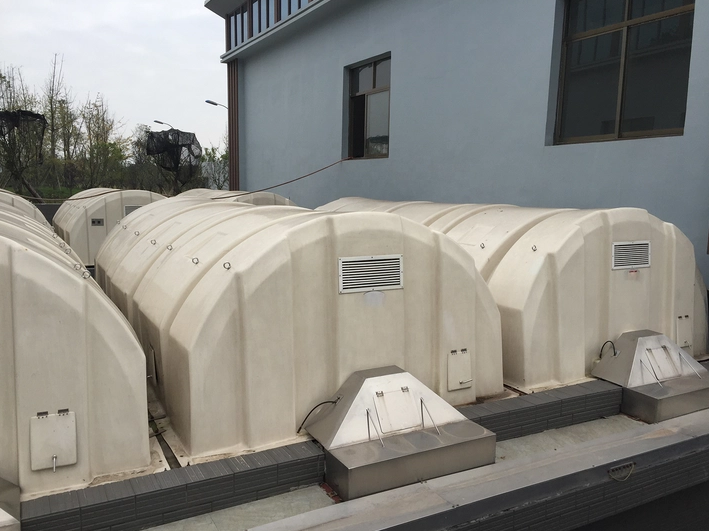
The entire RBC assembly, including the rotating media and shaft, is housed within a reactor tank or basin. This tank, often constructed from reinforced concrete or steel, holds the wastewater and allows the media to be partially submerged. The tank design may incorporate internal baffles to create multiple stages, promoting plug flow conditions and allowing for sequential biological processes, such as initial organic removal followed by nitrification. Covers are frequently installed over RBC tanks, particularly in colder climates, to protect the units from freezing, reduce heat loss, minimize algae growth from sunlight, and contain aerosols or odors.
Following the RBC unit, a secondary clarifier (or sedimentation tank) is an indispensable component. Its function is to separate the biological solids (sloughed biofilm or secondary sludge) from the treated wastewater effluent through gravity settling. A well-designed clarifier ensures that the final effluent discharged meets stringent suspended solids limits. The settled sludge is then typically collected for further treatment and disposal.
The effective design of an RBC system requires careful consideration of various parameters to ensure consistent and high-quality effluent, while also optimizing capital and operational costs.
The hydraulic loading rate (HLR) is defined as the volume of wastewater applied per unit of media surface area per day (e.g., m³/m²·d). It dictates the contact time between the wastewater and the active biofilm. A higher HLR implies a shorter contact time, which might be suitable for easily biodegradable wastewaters but could compromise removal efficiency for more complex or dilute streams. Optimal HLRs are determined based on influent wastewater characteristics and desired effluent quality.
The organic loading rate (OLR) is the amount of biodegradable organic matter (typically expressed as BOD5, biological oxygen demand in 5 days) applied per unit of media surface area per day (e.g., kg BOD5/m²·d). The OLR directly influences the metabolic activity of the biofilm and its thickness. Overloading the system can lead to an accumulation of biomass, oxygen depletion within the biofilm, and a reduction in treatment efficiency. Underloading, conversely, might not fully utilize the available biomass. Careful balancing of OLR is crucial for maintaining a healthy and active biofilm.
To achieve higher levels of treatment, particularly for nutrient removal (e.g., nitrification), RBC systems are frequently designed with multiple stages. In a multi-stage system, wastewater flows sequentially through several RBC compartments or units. Each stage develops a distinct microbial population adapted to the prevailing substrate concentration. The initial stages, exposed to higher organic loads, are dominated by heterotrophic bacteria that rapidly consume readily biodegradable organic matter. Subsequent stages, with lower organic loads, promote the growth of slower-growing nitrifying bacteria, which are essential for converting ammonia to nitrates. This staging optimizes the overall treatment process and allows for the removal of diverse pollutants.
The degree to which the RBC media is submerged in the wastewater is a critical operational parameter, typically ranging from 35% to 45% of the disc diameter. This partial submergence ensures that a significant portion of the biofilm is immersed for substrate uptake, while also allowing a sufficient portion to be exposed to atmospheric oxygen during rotation. Deviations from the optimal submergence can affect both oxygen transfer rates and the effective contact area for biological treatment.
The specific surface area (m²/m³) of the media is a crucial design parameter. Higher specific surface areas allow for more biomass to be supported within a given volume, potentially reducing the overall footprint of the treatment plant. The material and design of the media also influence biofilm adhesion and durability.
Rotating Biological Contactors offer a compelling array of benefits that contribute to their widespread adoption in various wastewater treatment applications.
RBCs are renowned for their straightforward operation. Unlike activated sludge systems that require precise control over aeration, mixed liquor suspended solids (MLSS), and sludge return rates, RBCs are largely self-regulating. The fixed-film nature provides inherent stability, making them less susceptible to operational upsets caused by hydraulic shock loads, organic shock loads, or fluctuating pH conditions. This simplicity reduces the need for highly skilled operators, lowering labor costs.
One of the most significant advantages of RBCs is their relatively low energy consumption. The slow rotational speed of the media requires minimal power for the drive mechanism. Furthermore, oxygen transfer is achieved passively by exposing the biofilm to the atmosphere during rotation, eliminating the need for energy-intensive mechanical aeration or blowers that are common in suspended growth systems. This makes RBCs an attractive option where energy costs are a concern or where energy infrastructure is limited.
RBCs are capable of achieving high levels of pollutant removal, consistently producing effluent that meets stringent discharge standards for biochemical oxygen demand (BOD5) and suspended solids (SS). With proper design, particularly multi-stage configurations, they can also effectively achieve nitrification (ammonia removal), and in some cases, partial denitrification (nitrate removal), leading to excellent overall effluent quality.
The attached growth of microorganisms on the media provides a robust and resilient biological community. Unlike suspended growth systems where biomass can be washed out during high flow events, the fixed biofilm in RBCs remains largely intact, allowing for rapid recovery after transient shock loads. This inherent stability makes RBCs suitable for applications with variable influent characteristics.
RBCs generally produce less biological sludge compared to conventional activated sludge systems. The sludge that is produced is typically denser, more stable, and settles well in the secondary clarifier, leading to lower sludge handling and disposal costs. The mature, well-flocculated biomass that sloughs off the media contributes to this improved settleability.
For certain applications, especially where land availability is limited, RBCs can offer a relatively compact footprint compared to other aerobic biological treatment technologies. The high specific surface area of modern media designs allows for a significant amount of biomass to be supported within a smaller physical space.
Despite their numerous advantages, RBC systems are not without their drawbacks, and these limitations must be considered during the planning and design phases.
The primary disadvantage of RBCs can be their relatively high initial capital cost. The cost associated with the specialized rotating media, robust shafts, bearings, drive mechanisms, and dedicated reactor tanks can be substantial, especially for larger installations. This can sometimes make them less competitive for very large municipal wastewater treatment plants compared to activated sludge systems.
While operation is simple, RBCs do contain mechanical components (shafts, bearings, drive units) that are continuously operating and subject to wear and tear. Regular inspection, lubrication, and eventual replacement of these parts are necessary maintenance activities, which can add to the long-term operational costs. Bearing failures, in particular, can be costly and disruptive.
Under certain conditions, such as high organic loads, inadequate pre-treatment, or specific industrial wastewater characteristics, the media can become excessively fouled or clogged. This can be due to overly thick biofilm growth, accumulation of inert solids, or precipitation of inorganic compounds. Severe fouling reduces the effective surface area, hinders oxygen transfer, and can lead to increased weight on the shaft, potentially causing mechanical stress and reduced treatment efficiency.
Like all biological processes, the metabolic activity of microorganisms in RBCs is temperature-dependent. In very cold climates, treatment efficiency can decrease significantly as microbial activity slows down. This often necessitates covering the RBC units, insulating the tanks, or even providing supplemental heating to maintain optimal operating temperatures, adding to capital and operational expenses.
While generally well-aerated, if the biofilm becomes excessively thick or if organic loading is exceptionally high, anaerobic conditions can develop within the deeper layers of the biofilm. This can lead to the generation of malodorous compounds, particularly hydrogen sulfide, which can be a nuisance for nearby communities. Proper design, loading control, and adequate ventilation are essential to mitigate odor potential.
Compared to highly flexible systems like activated sludge, RBCs offer less operational flexibility. For instance, there are typically no provisions for recirculation of secondary clarifier effluent directly back to the RBC unit, which can be a useful operational tool in other processes. Adjustments to treatment capacity or performance are largely tied to the number of stages or the total media surface area.
The versatility and robustness of Rotating Biological Contactors make them suitable for a wide array of wastewater treatment applications across different sectors.
RBCs are widely employed for the secondary treatment of domestic sewage, particularly for small to medium-sized communities. Their operational simplicity, energy efficiency, and ability to handle moderate fluctuations in flow and organic strength make them an attractive choice for decentralized treatment systems, subdivisions, and rural areas where skilled operational staff may be limited. They are an excellent alternative to trickling filters and activated sludge for such applications.
Many industrial wastewaters, ranging from food and beverage processing, dairy, pulp and paper, to textile and petrochemical industries, can be effectively treated using RBC technology. The attached growth biofilm can be particularly resilient to certain industrial contaminants. However, careful pre-treatment is often required to remove substances that could be toxic to microorganisms or cause severe media fouling. RBCs can be integrated into multi-stage industrial treatment trains, sometimes serving as a robust biological primary or secondary treatment step.
Beyond conventional secondary treatment, RBCs are highly effective for tertiary treatment, especially for the removal of ammonia nitrogen through nitrification. In later stages of a multi-stage RBC system, where carbonaceous BOD has been significantly reduced, nitrifying bacteria (Nitrosomonas and Nitrobacter) can thrive on the available ammonia. This makes RBCs a preferred choice when stringent nitrogen discharge limits must be met.
In some cases, RBCs can be utilized as a pre-treatment step for highly concentrated industrial wastewaters before they are discharged into municipal sewer systems or undergo further, more intensive treatment. By reducing the bulk of organic load, RBCs can alleviate the burden on downstream treatment processes.
While RBCs are generally stable, operators can encounter specific challenges. Understanding these issues and implementing appropriate mitigation strategies is crucial for sustained optimal performance.
Problem: An excessively thick biofilm can lead to several issues, including oxygen depletion in the inner layers, increased weight on the shaft (leading to potential mechanical stress), and reduced treatment efficiency due to diffusion limitations.
Mitigation: This often indicates an unusually high organic load. Solutions include adjusting the influent organic loading, ensuring adequate pre-treatment to reduce incoming solids and BOD, or employing intermittent aeration techniques (if air-driven) to enhance shearing.
Problem: The proliferation of certain filamentous microorganisms can lead to a bulky, poor-settling sludge in the secondary clarifier, resulting in high suspended solids in the effluent.
Mitigation: This is often related to nutrient imbalances (e.g., low nitrogen or phosphorus), low dissolved oxygen, or high organic loads. Addressing these root causes through nutrient supplementation, ensuring proper submergence and rotation for aeration, or adjusting loading rates can help restore a healthy, floc-forming microbial community.
Problem: Wear and tear on bearings, shafts, or the drive mechanism can lead to costly breakdowns and interruptions in treatment.
Mitigation: Regular preventive maintenance is paramount. This includes routine inspection of bearings for signs of wear, ensuring proper lubrication schedules are followed, checking shaft alignment, and servicing the motor and gearbox. Timely replacement of worn components can prevent more extensive damage and downtime. Modern RBC designs often incorporate more robust materials and improved bearing technologies to enhance longevity.
Problem: Reduced wastewater temperatures in colder climates slow down microbial metabolic rates, leading to decreased treatment efficiency for BOD removal and particularly for nitrification.
Mitigation: The most common strategy is to cover the RBC units to reduce heat loss to the ambient air and protect against freezing. Insulated tank walls can also help. In severe cases, supplemental heating of the influent wastewater may be considered, though this adds significant operational cost.
Problem: Odors, primarily from hydrogen sulfide, can arise if anaerobic conditions develop within the RBC unit, often due to high organic loading, inadequate aeration, or stagnant zones.
Mitigation: Ensuring sufficient oxygen transfer through proper rotation and submergence, optimizing organic loading rates, and maintaining good hydraulic flow patterns to prevent dead zones are key. Covering the units with adequate ventilation and possibly odor control technologies (e.g., activated carbon filters) can be employed if odors persist.
Rotating Biological Contactors represent a mature and highly effective technology in the field of wastewater treatment. Their reliance on attached-growth biofilms, facilitated by rotating media, offers a compelling balance of high treatment efficiency, operational simplicity, and energy conservation. While challenges such as initial capital costs and mechanical maintenance exist, the inherent robustness, resilience to shock loads, and ability to produce high-quality effluent make RBCs particularly valuable for a diverse range of applications, from small municipal facilities to demanding industrial settings. As the global demand for sustainable wastewater management intensifies, RBC technology continues to evolve, solidifying its role as a foundational and enduring solution in environmental engineering.